Loading...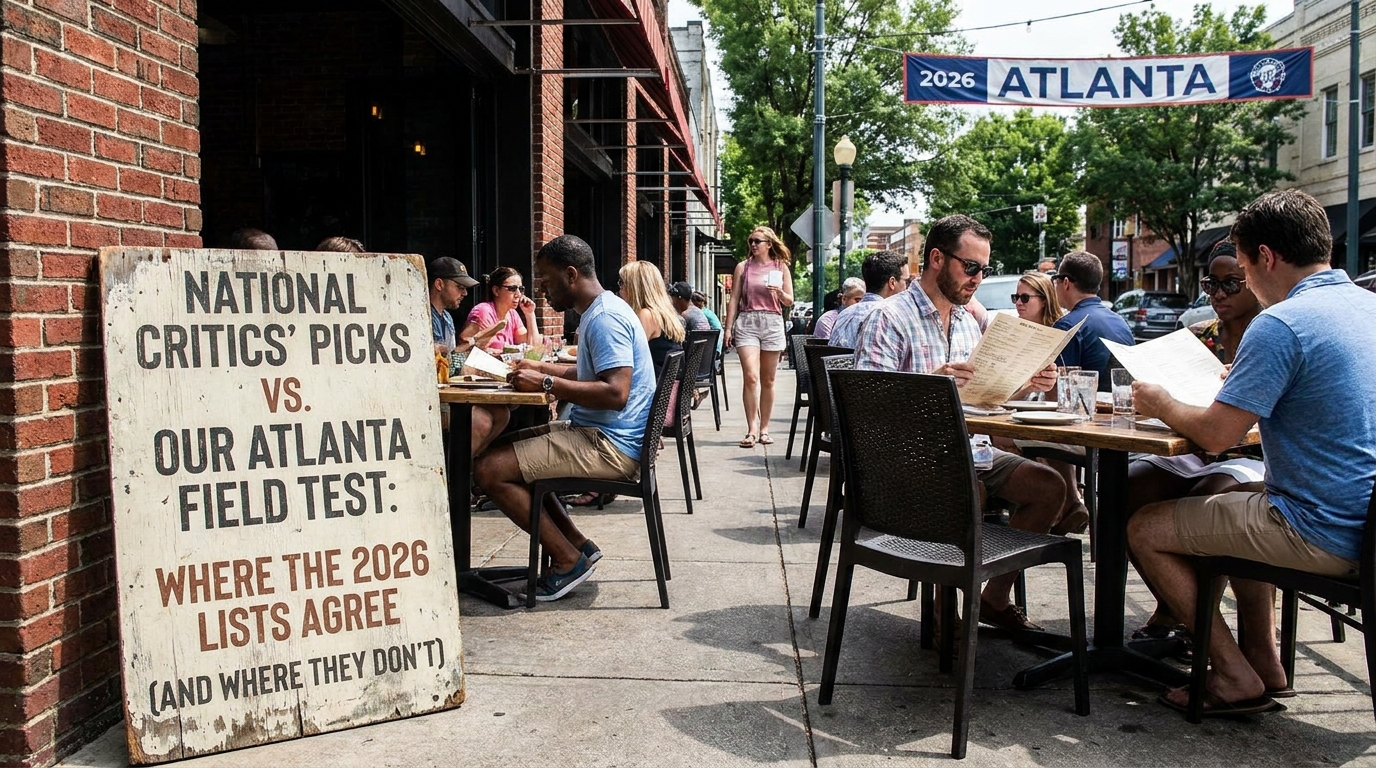
Every June, the big national magazines drop their "best bikes of the year" lists. Bicycling's new 16 Best Road, Gravel, Mountain, and Electric Bikes of 2026 is a good one — broad, well-tested, and full of dream machines. But here's the thing: those reviewers ride in Marin County, Bentonville, and the Hudson Valley. They don't grind up Freedom Parkway in 92-degree humidity, and they don't hit the chip-seal transition on the Lionel Hampton PATH at 18 mph with a kid on the back.
So we ran the national list against our own June 3 Atlanta field test — the one where John Patrick Herold spent weeks pounding bikes up Piedmont climbs and across PATH gravel transitions. Here's where the two lists shake hands, and where Atlanta riders should trust the local call.
Where the lists agree: torque, tires, and the cargo boom
The biggest point of agreement isn't a specific bike — it's a philosophy. Both Bicycling's panel and our local testers landed on the same three non-negotiables for 2026: torque sensors over cadence sensors, wider tires over skinny ones, and cargo bikes as a legitimate car replacement.
On the cargo front, the national list and our test converge almost perfectly. Bicycling's electric picks lean heavily on Bosch-powered family haulers — and so did we. The Tern GSD S10 won our cargo category for the same reason it keeps showing up on national lists: the Bosch Performance Line mid-drive doesn't flinch carrying 80 pounds of kid and groceries up Highland Avenue. That matters more every year. The U.S. cargo e-bike market is projected to hit $1.54 billion by 2035, and Atlanta families are a big reason why.
A 250-watt rear hub motor that looks fine on paper can wilt under load on Freedom Parkway in July. A torque-sensing mid-drive simply doesn't.
On gravel, the two lists also broadly agree: 40mm tires are the new floor, not the ceiling. Anything narrower turns the Silver Comet's chip-seal sections into a teeth-rattling exercise.
Where they diverge: the Piedmont changes everything
The disagreements are more interesting — and more useful if you're about to spend $2,000 to $6,000.
Commuter ebikes. National reviewers love a clean, minimalist commuter with a 250W hub motor and a cadence sensor. On flat Brooklyn streets, that's fine. On the climb out of Old Fourth Ward up to Highland, it's a slog — the cadence sensor lags, the motor overheats, and you end up sweating through your shirt before the BeltLine. Our pick, the Aventon Level.3 (38–42 miles of real range, torque sensor, integrated fenders), didn't crack Bicycling's top tier. It should have. For Atlanta's hills and summer storms, it's the right tool.
Mixed-surface / gravel-adjacent ebikes. The national list skews toward premium gravel bikes built for dry Western fire roads. Our winner, the Ride1Up Prodigy XR, costs less than half of some of those picks and handled Stone Mountain climbs with a Brose mid-drive and 2.4" tires. If your weekends are split between the Eastside Trail and a Stone Mountain loop, the Prodigy XR is a smarter buy than a $7,000 carbon gravel rig you'll baby through chip-seal.
Budget category. This one's a real split. Bicycling's budget picks hover around $2,000 — which isn't really "budget" for a first-time buyer dipping a toe in. The Lectric XP 4 (under $1,500, folding, fat tires, 22–28 mile range) didn't make their list at all. For a Decatur neighborhood commuter or an apartment-dweller who needs to fold a bike into a closet, it's the most honest entry point on the market.
Road bikes. Here, defer to the national reviewers. If you're chasing Silk Sheets on Roswell Road or pushing a Saturday Cartersville loop, the road picks from Bicycling's list translate well — Atlanta's road riding isn't that different from anywhere else's once you're out of traffic.
The local filter: five questions before you buy
Before you pull the trigger on any national "best of" pick, run it through Atlanta's filter:
- Torque sensor or cadence? For anything you'll ride uphill loaded, insist on torque.
- Tire width? 2.0" minimum for PATH chip-seal; 40mm minimum for gravel.
- Motor wattage and type? 500W+ hub or any quality mid-drive (Bosch, Brose, Shimano EP) for Piedmont climbs.
- Fenders and rack mounts? Atlanta storms arrive in 20 minutes. Don't skip them.
- Where will you actually ride it? BeltLine commute, Silver Comet weekend, Stone Mountain loop, and grocery runs each point to different categories.
The bottom line
National "best of" lists are a great starting place — they vet quality, fit, and component spec at a depth most local outlets can't. But they don't ride your route. When the national pick and our Atlanta field test agree (Tern GSD S10, the importance of torque sensors, wider gravel tires), buy with confidence. When they diverge — commuter, budget, mixed-surface — trust the bike that's been up Freedom Parkway in August.
Enjoyed this head-to-head? Subscribe to the E-Bike City newsletter for Atlanta-tested buyer's guides, route tips, and infrastructure news every week.